
- Buy Crypto
- Markets
 Futures
- Spot
- Copy Trade
- Earn
- More
Long-Term Vision, Lasting Value: 7 of the Best Cryptos to Buy for Hold Long-Term Right Now
By: coin central|2025/05/07 14:45:01
0
Share
As the crypto market matures beyond its speculative infancy, long-term value is once again becoming the metric that serious investors are prioritizing. With increased institutional participation, regulatory developments, and rising real-world applications, projects that offer utility, scalability, and innovation are positioning themselves for enduring relevance. The 2025 investor is no longer solely chasing overnight gains—but rather seeking assets that can stand the test of technological evolution, user adoption, and macroeconomic cycles.Now more than ever, investors are searching for the best cryptos to buy for hold long-term, prioritizing innovation, scalability, and adoption potential. These aren’t meme coins or trend-driven assets—they’re projects that show long-term alignment with where the digital economy is headed. Whether it’s through improving user security, powering the GPU economy, enabling private transactions, or building multi-chain compatibility, these protocols offer more than just hype—they deliver structural value.At the forefront is Qubetics, a rapidly rising blockchain project with an ongoing crypto presale and an emphasis on non-custodial, multi-chain wallet infrastructure. The implications of such a system are vast in a market that increasingly values autonomy and chain-agnostic access. Alongside Qubetics, other major players like XRP, Near Protocol, Cosmos, Render, Monero, and Polygon are also building with a long-term horizon in view.1. Qubetics: Non-Custodial Multi-Chain Wallet Infrastructure Built for the FutureQubetics is shaping up to be one of the best cryptos to buy for hold long-term thanks to its unparalleled focus on wallet sovereignty and seamless blockchain interoperability. Its flagship offering, the Non-Custodial Multi-Chain Wallet, addresses two critical user needs: full control of assets and the ability to transact effortlessly across multiple chains. As regulatory frameworks start to emphasize custody liabilities and centralized exchange risks, Qubetics is positioning itself as a safeguard for users and developers alike.The architecture behind Qubetics is future-facing. Through its modular development suite—QubeQode and the Qubetics IDE—developers can build decentralized apps that directly integrate wallet features and multi-chain support. This vertical integration reduces fragmentation, enhances UX, and drives stickiness among both users and developers. More importantly, Qubetics is designed not as a competitor to existing chains, but as an integrator—giving it a wide base of compatibility.Now in Stage 33 of its crypto presale, Qubetics is priced at $0.2302, with over $16.7 million raised, more than 25,800 holders, and 511 million $TICS tokens sold. For long-term investors, the value proposition is striking. If $TICS reaches $1 post-presale, that’s a 334.33% ROI. At $5, 2,071.63%, and at $10—after mainnet launch—4,243.26% ROI. A $15 price could mean a staggering 6,414.90% ROI. For those committed to identifying the best cryptos to buy for hold long-term, Qubetics offers an unmatched combination of security, utility, and upside potential.2. XRP: Enterprise-Focused Utility with Global Payment InfrastructureXRP remains one of the most recognized assets in enterprise blockchain use. Developed by Ripple Labs, XRP enables fast, low-cost, cross-border transactions, solving one of the biggest inefficiencies in global finance. While much of its early momentum was marred by regulatory uncertainty in the U.S., recent developments suggest increasing clarity around its classification as a digital asset, which bodes well for institutional integration.Ripple’s On-Demand Liquidity (ODL) solution has already been deployed across corridors in Asia, the Middle East, and Latin America. This real-world use case—streamlining remittances and interbank settlements—gives XRP a unique position in the market. Unlike many Layer 1 tokens that are still building toward adoption, XRP has already cemented a role in financial infrastructure.For long-term holders, XRP offers exposure to a network with proven stability, expanding partnerships, and a practical application that aligns with institutional priorities. While price volatility remains, the underlying utility continues to strengthen. If global banks increase their reliance on blockchain for payments, XRP may see renewed demand and valuation growth.3. Render: Powering the Future of Decentralized GPU ComputationRender has carved a niche within Web3 by decentralizing access to GPU rendering power. The protocol allows users in need of high-performance GPU services—such as AI developers, game designers, and 3D artists—to tap into a global network of underutilized hardware. This model transforms idle computational power into an asset, making Render a crucial infrastructure layer for the digital economy’s most compute-intensive sectors.The network’s integration with OctaneRender, and growing partnerships with creators and software platforms, indicates that adoption is steadily rising. The future of virtual reality, AI-generated content, and immersive gaming will rely on scalable rendering—an area where centralized solutions are limited by cost and supply.With the tokenomics designed to reward providers and reduce bottlenecks, Render provides an efficient and permissionless alternative to cloud-based rendering. For long-term investors, Render represents exposure to the digital world’s “power grid”—a backbone service that becomes more valuable as demand increases.4. Near Protocol: Sharding for Scalability and Developer AccessibilityNEAR Protocol is gaining ground among developers thanks to its ease of use, smart contract flexibility, and sharded architecture that allows for parallel transaction processing. These features translate to lower fees, faster execution, and greater accessibility—all crucial for onboarding new users and developers into Web3.NEAR is also one of the few projects actively building toward cross-chain composability. Its Blockchain Operating System (BOS) initiative enhances platform interoperability by allowing dApps from different ecosystems to interact with each other through a common interface. This strategy is not only technically elegant but also necessary in today’s fragmented blockchain landscape.As more developers build on NEAR and deploy user-friendly applications across DeFi, gaming, and real-world finance, the protocol’s long-term value increases. NEAR is not merely a chain—it is shaping up to be a universal layer for application development. Investors looking for programmable, scalable blockchains may find NEAR among the most promising assets to hold.5. Cosmos: The Original Interoperability PioneerCosmos has long stood out for its vision of a decentralized “Internet of Blockchains.” By allowing independent chains to interoperate through the Inter-Blockchain Communication (IBC) protocol, Cosmos has become a vital player in solving one of blockchain’s biggest challenges: siloed networks. Cosmos SDK, one of the most widely used frameworks, powers chains like Osmosis, Secret Network, and Cronos.Recent developments such as Interchain Security and Liquid Staking reinforce Cosmos’ commitment to enhancing its network’s reliability and scalability. These features help secure smaller chains while preserving sovereignty—critical in an ecosystem where one size doesn’t fit all.For investors seeking foundational infrastructure with tangible application, Cosmos represents a mature, tested, and ever-evolving project. Its continued support for modular blockchain deployment ensures its relevance as more projects build customized sovereign networks.6. Monero: The Enduring Standard for PrivacyMonero (XMR) has consistently delivered on its core promise: financial privacy. While many projects have emerged attempting to offer similar capabilities, Monero remains the gold standard due to its default privacy features, active development, and robust community support. Unlike Bitcoin or Ethereum, Monero conceals the sender, receiver, and amount of every transaction.This privacy-first approach is not just philosophical—it’s practical. In a future where governments may introduce programmable digital currencies with total oversight, Monero offers the counterbalance of financial discretion. It appeals to users who value anonymity, security, and censorship resistance.Monero’s technical evolution is ongoing, with upgrades like Bulletproofs and Dandelion++ continuing to enhance transaction obfuscation while reducing costs. For long-term holders, Monero serves as both a hedge against state-controlled finance and a pillar of digital freedom.7. Polygon: Strengthening Ethereum’s Scalability EcosystemPolygon has become synonymous with Ethereum scalability. Through its suite of solutions—including PoS sidechains and zero-knowledge rollups (zkEVM)—Polygon enables high-speed, low-cost transactions without compromising Ethereum’s base-layer security. This makes it an ideal platform for dApp developers and enterprise adopters looking to avoid Ethereum’s congestion and high fees.Its partnerships with household names like Reddit, Stripe, and Starbucks showcase Polygon’s ability to bridge Web2 and Web3. These collaborations bring real-world users onto the blockchain, driving both adoption and transaction volume. Additionally, the network is increasingly used for DeFi, gaming, and NFT platforms—further solidifying its ecosystem depth.For investors, Polygon offers one of the clearest cases of real-world integration and developer adoption. It enhances Ethereum’s value proposition while carving out its own distinctive role in the multi-chain universe.Conclusion: Qubetics Leads the New Class of Long-Term Crypto InfrastructureIn a field filled with ambitious projects, Qubetics distinguishes itself not just through vision, but through execution and investor opportunity. With its Non-Custodial Multi-Chain Wallet, Qubetics answers a growing market demand for chain-agnostic, secure, user-controlled asset management. This is not an abstract roadmap—Qubetics is building tools that simplify the decentralized experience while respecting user autonomy.Its crypto presale, currently in Stage 33, presents one of the most attractive entry points in the market. At $0.2302 per $TICS, and with $16.7M+ raised, the project is already capturing serious attention. Over 25,800 token holders and more than 511 million tokens sold reflect strong community belief. And the math is hard to ignore: a move to $1 would return 334.33%, while a $10 target post-mainnet would deliver over 4,243% ROI—and possibly more with ecosystem expansion.Ultimately, if you are exploring the best cryptos to buy for hold long-term, Qubetics must sit at the top of your watchlist. It is building across all critical fronts: usability, interoperability, and decentralization. As its tools go live and adoption scales, early holders will likely be rewarded—not just with returns, but with exposure to a protocol leading the charge toward a truly user-empowered blockchain future.For More Information:Qubetics: https://qubetics.comPresale: https://buy.qubetics.comTelegram: https://t.me/qubeticsTwitter: https://x.com/qubeticsFAQs1: Why is Qubetics considered one of the best cryptos to buy for hold long-term?Qubetics offers a unique combination of real-world utility through its Non-Custodial Multi-Chain Wallet, active development of Web3 infrastructure tools, and strong ROI potential via its crypto presale.2: How do I join the Qubetics crypto presale?You can participate through the official Qubetics presale portal. It’s currently in Stage 33 with over $16.7M raised and $TICS priced at $0.2302.3: What kind of ROI can be expected from investing in Qubetics?If $TICS reaches $1 after the presale, ROI is 334.33%. At $10 post-mainnet launch, ROI could exceed 4,243%, with even higher upside if adoption accelerates.The post Long-Term Vision, Lasting Value: 7 of the Best Cryptos to Buy for Hold Long-Term Right Now appeared first on CoinCentral.
You may also like

The second half of stablecoins no longer belongs to the crypto circle
What Coinbase doesn't want, Mastercard is eager to buy.

Cursor "Shell" Kimi Controversy Reversed: From Copyright Infringement Allegations to Authorized Collaboration, China's Open Source Model Once Again Becomes a Global AI Foundation
Cursor was accused of being based on Kimi K2.5, which sparked controversy, and was later confirmed to be compliant through Fireworks AI due diligence.

The Real Reason Tokens Don't Sell: 90% of Crypto Projects Overlook Investor Relations
Provide an Investor Relations Best Practices Guide for Crypto Projects.

Is the income of pump.fun real, earning a million dollars a day despite the market downturn?
If it can really earn this much, what is the reason for the low price of $PUMP?

The real reason why tokens are not selling: 90% of crypto projects neglect investor relations
Investor Relations Practice Guide for Cryptocurrency Projects.

Who is the true winner of the "Tokenization" narrative?
Virtually everyone benefits, but the reason for the benefit, the timing, and the underlying logic are completely different.

Moss: The Era of AI-Traded by Anyone | Project Introduction
AI Trading Agent is rapidly growing its infrastructure.

Chip Smuggling Case Exposes Regulatory Loophole | Rewire News Evening Update
AI chips have become a strategic asset more sensitive than missiles

How a Structured AI Crypto Trading Bot Won at the WEEX Hackathon
Ritmex demonstrates how disciplined risk control and structured signals can make an AI crypto trading bot more stable and reliable on WEEX, highlighting the importance of combining execution discipline with scalable AI trading systems.

Old Indicator Fails, Three Major New Signals Emerge: BTC True Bottom May Still Be Below $60K
When the grocery shopping auntie on the subway, or Tony the hairdresser, start asking you about BTC, crypto, and cryptocurrency investments, selling immediately will be the only best option.

Meeting OpenClaw Founder at a Hackathon: What Else Can Lobsters Do?
Imperial College London MetaGame: AI Agent × Web3 Landing Three Major Directions.
Huang Renxun's Latest Podcast Transcript: NVIDIA's Future, Embodied Intelligence and Agent Development, Soaring Demand for Inferencing, and AI's PR Crisis
The future of competition is not only about whose model is bigger, whose computing power is stronger, but also about who understands the industry better, who can more deeply integrate AI into real processes, and who can organize these capabilities into a set of executable, scalable systems
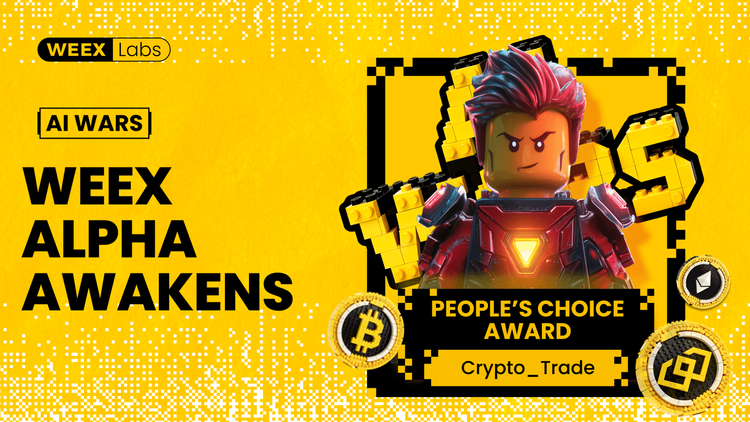
How a Structured AI Crypto Trading Bot Won at the WEEX Hackathon
Crypto_Trade shows how structured inputs and controlled adaptability can build a more stable and reliable AI crypto trading bot within the WEEX AI Trading Hackathon, highlighting a practical path toward scalable AI trading systems.

AI Starts to Devour the Manufacturing Industry | Rewire News Morning Edition
When Bezos starts using AI to buy factories instead of building data centers, it shows that he believes the next wave of AI's value is not inside the box.
When Scaling Meets Speed, Ethereum Foundation Introduces "Hardness" to Safeguard the Base Layer
Hardness is a protocol-level commitment to Ethereum core properties, including censorship resistance, privacy, security, and permissionlessness.
Google, Circle, Stripe Flock Together to Let AI Spend Money: Payment Giants' Joys and Worries in 2026 Q1
The real enemy is no longer each other, but zero cost itself

$100 Billion Factory Purchase: Bezos and Middle Eastern Capital Shift AI Money from Cloud to Shop Floor
Bezos doesn't invest in a new model; he invests in a supply chain.

Xiaomi and MiniMax both unleash their ultimate moves, signaling the start of the Agent Pricing War.
No brand, no marketing, let developers vote with their feet in 8 days
The second half of stablecoins no longer belongs to the crypto circle
What Coinbase doesn't want, Mastercard is eager to buy.
Cursor "Shell" Kimi Controversy Reversed: From Copyright Infringement Allegations to Authorized Collaboration, China's Open Source Model Once Again Becomes a Global AI Foundation
Cursor was accused of being based on Kimi K2.5, which sparked controversy, and was later confirmed to be compliant through Fireworks AI due diligence.
The Real Reason Tokens Don't Sell: 90% of Crypto Projects Overlook Investor Relations
Provide an Investor Relations Best Practices Guide for Crypto Projects.
Is the income of pump.fun real, earning a million dollars a day despite the market downturn?
If it can really earn this much, what is the reason for the low price of $PUMP?
The real reason why tokens are not selling: 90% of crypto projects neglect investor relations
Investor Relations Practice Guide for Cryptocurrency Projects.
Who is the true winner of the "Tokenization" narrative?
Virtually everyone benefits, but the reason for the benefit, the timing, and the underlying logic are completely different.


 App
App