
- Buy Crypto
- Markets
 Futures
- Spot
- Copy Trade
- Earn
- More
Ripple CLO Slams SEC’s Retreat, Urges Clear Crypto Rules After XRP Lawsuit Ends
By: bitcoin ethereum news|2025/05/07 15:45:01
0
Share
Key Takeaways: The SEC has officially dropped its case against Ripple Labs after four years, signaling a major shift. Ripple CLO Stuart Alderoty accuses the SEC of inconsistent enforcement and lacking clear crypto regulation. Alderoty calls on the United States to adopt clear, intelligent rules to safeguard consumers and foster creativity. The long-running SEC-Ripple Labs lawsuit has taken a major turn. Nearly four years after the SEC dropped its last claims against Ripple and its management, one of the most high-profile crypto conflicts in U.S. history might come to an end. Stuart Alderoty , Ripple’s chief legal officer, has commented on the subject . His critique of the SEC highlights crypto industry concern about imprecise and harsh regulatory practices. Read More: Ripple Buys Hidden Road for $1.25B to Connect Conventional Finance with Crypto SEC Retreat Marks Pivotal Moment in Crypto Enforcement SEC sued Ripple in December 2020 for marketing unregistered XRP securities. Ripple’s lawyers and the regulator had verdicts, partial victories, and a tense deadlock. The SEC lost in 2023 when the court found that secondary market XRP sales were not securities transactions. The commission also dropped allegations against Ripple executives Brad Garlinghouse and Chris Larsen. SEC’s Backpedaling Raises Questions Speaking after the SEC’s withdrawal, Alderoty asked why the case was pursued in the first place. “Why did the SEC bring this case if they were going to walk away years later?” he said. His comments echo crypto sector concerns that enforcement operations are replacing regulatory frameworks. Alderoty remarked that the SEC is not only leaving Ripple but also reducing pressure on other crypto firms, suggesting an internal rethinking. Lack of Clear Rules Continues to Undermine Crypto in the U.S. Alderoty stressed that regulatory clarity, not enforcement, is the issue. “We never had proper crypto guidelines and regulations in this country,” he said. He says this lack of structure makes it hard for reputable companies to operate and innovate. He emphasized that regulation should not be based on fear or arbitrariness. Instead, build it on transparency, consistency, and justice. “This country needs to clean up the mess,” Alderoty said. Industry Calls for Smarter Legislation and Congressional Action With the Ripple case winding down, attention is turning to lawmakers. Alderoty urged Congress to step in and create comprehensive crypto regulations that offer protection to consumers without stifling innovation. Ripple Pushes for Regulatory Reform Post-Lawsuit Ripple is not alone in this call. Multiple industry leaders and companies have voiced support for legislative action to bring structure to the crypto landscape. While some bills have been proposed in Congress, none have passed with full bipartisan support or clear SEC cooperation. For Ripple, the next chapter may include lobbying efforts and participation in drafting new legislation. The company has positioned itself not just as a crypto enterprise, but also as a vocal advocate for rational oversight in digital finance. Alderoty’s message is clear: regulatory uncertainty benefits no one—not companies, not consumers, and not the government. By cleaning up the rules and establishing guardrails, the U.S. can allow crypto to flourish responsibly. Read More: Ripple Spends $50 Million on Crypto Education: Adapting to an Uncertain Regulatory Environment Ripple Victory Could Influence Other Crypto Cases The SEC’s withdrawal from the Ripple case could have ripple effects (pun intended) across ongoing enforcement actions in the crypto space. Companies such as Coinbase and Binance are currently fighting their own legal battles with the SEC. Legal experts say Ripple’s verdict might improve those companies’ positions, especially when arguing against outmoded securities rules for crypto assets. More broadly, the SEC’s withdrawal may indicate that current crypto legal techniques are becoming harder to defend, especially in light of critical court verdicts and political pressure for reform. SEC’s Reputation on the Line The SEC’s Ripple case handling has drawn scrutiny from lawmakers, legal commentators, and the crypto sector. Critics argue the agency uses “regulation by enforcement” to circumvent legislation. As more firms object and courts limit the SEC’s reach, its credibility may suffer. The growing pushback to regulatory excess includes Alderoty’s comments. Ripple Sets Sights on Global Expansion Amid Legal Clarity With the case virtually over, Ripple appears to be expanding globally. Blockchain firms have grown faster in Asia, the Middle East, and Europe due to clearer laws and more supportive governments. Ripple wants more institutional partners and to build its enterprise blockchain products, including XRP Ledger-based cross-border payment solutions, after its U.S. legal win. Ripple’s leadership is highlighting its readiness to move forward confidently and aggressively after the SEC’s setback. The post Ripple CLO Slams SEC’s Retreat, Urges Clear Crypto Rules After XRP Lawsuit Ends appeared first on CryptoNinjas. Source: https://www.cryptoninjas.net/news/ripple-clo-slams-secs-retreat-urges-clear-crypto-rules-after-xrp-lawsuit-ends/
You may also like

Particle Founder: The entrepreneurial insights I have gained the most from in the past year
Stop lean startup, stop lightning entrepreneurship, and think carefully about what your product aspirations are.

Huang Renxun's latest podcast transcript: The future of Nvidia, the development of embodied intelligence and agents, the explosion of inference demand, and the public relations crisis of artificial intelligence
The competition in the future is not just about whose model is larger or whose computing power is stronger, but also about who understands the industry better, who can embed AI more deeply into real processes, and who can organize these capabilities into a runnable and scalable system.

OKX Ventures Research Report: AI Agent Economic Infrastructure Research Report (Part 1)
The existing infrastructure is hostile to the Agent economy. Agents can think and act independently at the "capability level," but at the "economic level," they are still locked into infrastructure designed for humans.

The migration of settlement rights: B18 and the institutional starting point of on-chain banks
In the traditional system, banks decide the settlement; in the on-chain system, code begins to take over this responsibility.

From Tencent and Circle: Looking at the Simple and Difficult Questions of Investment
The AI narrative continues to ferment, but the recent performance of related stocks varies, with some in the midst of summer and others as if in winter.

The second half of stablecoins no longer belongs to the crypto circle
What Coinbase doesn't want, Mastercard is eager to buy.

Cursor "Shell" Kimi Controversy Reversed: From Copyright Infringement Allegations to Authorized Collaboration, China's Open Source Model Once Again Becomes a Global AI Foundation
Cursor was accused of being based on Kimi K2.5, which sparked controversy, and was later confirmed to be compliant through Fireworks AI due diligence.

The Real Reason Tokens Don't Sell: 90% of Crypto Projects Overlook Investor Relations
Provide an Investor Relations Best Practices Guide for Crypto Projects.

Is the income of pump.fun real, earning a million dollars a day despite the market downturn?
If it can really earn this much, what is the reason for the low price of $PUMP?

The real reason why tokens are not selling: 90% of crypto projects neglect investor relations
Investor Relations Practice Guide for Cryptocurrency Projects.

Who is the true winner of the "Tokenization" narrative?
Virtually everyone benefits, but the reason for the benefit, the timing, and the underlying logic are completely different.

Moss: The Era of AI-Traded by Anyone | Project Introduction
AI Trading Agent is rapidly growing its infrastructure.

Chip Smuggling Case Exposes Regulatory Loophole | Rewire News Evening Update
AI chips have become a strategic asset more sensitive than missiles

How a Structured AI Crypto Trading Bot Won at the WEEX Hackathon
Ritmex demonstrates how disciplined risk control and structured signals can make an AI crypto trading bot more stable and reliable on WEEX, highlighting the importance of combining execution discipline with scalable AI trading systems.

Old Indicator Fails, Three Major New Signals Emerge: BTC True Bottom May Still Be Below $60K
When the grocery shopping auntie on the subway, or Tony the hairdresser, start asking you about BTC, crypto, and cryptocurrency investments, selling immediately will be the only best option.

Meeting OpenClaw Founder at a Hackathon: What Else Can Lobsters Do?
Imperial College London MetaGame: AI Agent × Web3 Landing Three Major Directions.
Huang Renxun's Latest Podcast Transcript: NVIDIA's Future, Embodied Intelligence and Agent Development, Soaring Demand for Inferencing, and AI's PR Crisis
The future of competition is not only about whose model is bigger, whose computing power is stronger, but also about who understands the industry better, who can more deeply integrate AI into real processes, and who can organize these capabilities into a set of executable, scalable systems
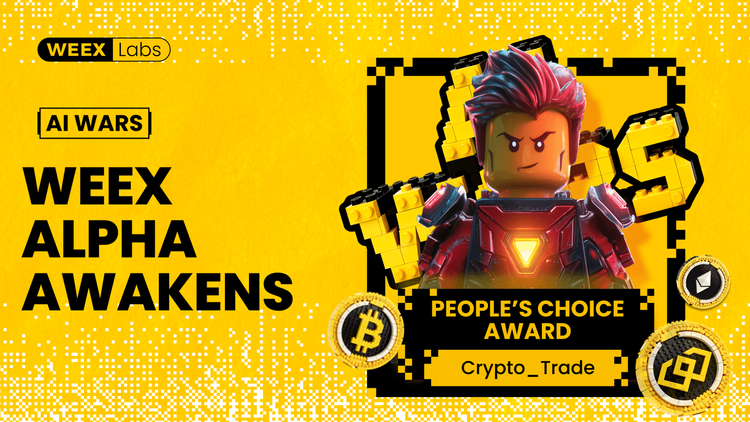
How a Structured AI Crypto Trading Bot Won at the WEEX Hackathon
Crypto_Trade shows how structured inputs and controlled adaptability can build a more stable and reliable AI crypto trading bot within the WEEX AI Trading Hackathon, highlighting a practical path toward scalable AI trading systems.
Particle Founder: The entrepreneurial insights I have gained the most from in the past year
Stop lean startup, stop lightning entrepreneurship, and think carefully about what your product aspirations are.
Huang Renxun's latest podcast transcript: The future of Nvidia, the development of embodied intelligence and agents, the explosion of inference demand, and the public relations crisis of artificial intelligence
The competition in the future is not just about whose model is larger or whose computing power is stronger, but also about who understands the industry better, who can embed AI more deeply into real processes, and who can organize these capabilities into a runnable and scalable system.
OKX Ventures Research Report: AI Agent Economic Infrastructure Research Report (Part 1)
The existing infrastructure is hostile to the Agent economy. Agents can think and act independently at the "capability level," but at the "economic level," they are still locked into infrastructure designed for humans.
The migration of settlement rights: B18 and the institutional starting point of on-chain banks
In the traditional system, banks decide the settlement; in the on-chain system, code begins to take over this responsibility.
From Tencent and Circle: Looking at the Simple and Difficult Questions of Investment
The AI narrative continues to ferment, but the recent performance of related stocks varies, with some in the midst of summer and others as if in winter.
The second half of stablecoins no longer belongs to the crypto circle
What Coinbase doesn't want, Mastercard is eager to buy.


 App
App