
- Buy Crypto
- Markets
 Futures
- Spot
- Copy Trade
- Earn
- More
Stablecoin standoff: Senate Democrats withdraw support, jeopardizing crypto bill’s path
By: cryptonews|2025/05/07 16:15:02
0
Share
A group of nine Senate Democrats who previously backed crypto-friendly legislation are now threatening to derail a landmark stablecoin bill, signaling deepening divisions over how the fast-growing digital asset sector should be regulated. In a surprise Saturday statement first reported by Politico, the senators declared they would not support the GOP-led bill “in its current form” if it reaches the Senate floor, citing a range of unresolved concerns. Their demands for changes focus on several key areas: safeguards to prevent illicit financial flows, stricter rules on overseas stablecoin providers, national security, stronger guarantees that stablecoins won’t undermine the safety and soundness of the existing financial infrastructure, and tougher penalties on noncompliant actors. The move comes just days before the chamber is expected to hold a procedural vote on the legislation, which aims to create the first federal framework for stablecoin issuers — digital tokens typically pegged to the U.S. dollar or other assets. Who signed? Who blocked? The Democratic bloc, which includes Sens. Ruben Gallego (Ariz.), Mark Warner (Va.), Lisa Blunt Rochester (Del.), and Andy Kim (N.J.) — all of whom previously voted in favor of the bill when it passed the Senate Banking Committee in March — now say the legislation still “has numerous issues that must be addressed.” The letter, also signed by Sens. Raphael Warnock (Ga.), Catherine Cortez Masto (Nev.), Ben Ray Luján (N.M.), John Hickenlooper (Colo.), and Adam Schiff (Calif.), emphasized a continued willingness to negotiate. “We are eager to continue working with our colleagues to address these issues,” the senators wrote. “As stablecoins continue to grow in popularity, it is critical for Congress to work in a bipartisan fashion to create a regulatory framework that sets forth clear rules of the road.” Notably absent from the statement were the bill’s two Democratic co-sponsors: Sen. Kirsten Gillibrand (N.Y.) and Sen. Angela Alsobrooks (Md.). GOPeeved The bill’s lead sponsor, Sen. Bill Hagerty (R-Tenn.), responded to the pushback with a warning and a challenge. “We have a choice here. Move forward and make any remaining changes needed in a bipartisan way, or show that digital asset and crypto legislation remains a solely Republican issue,” he said, stressing the need to solidify U.S. dominance in the digital asset space. The defection adds a new layer of complexity to an already contentious process, especially as the Trump family’s growing involvement in the digital asset space — including plans for a new stablecoin venture — has injected fresh political sensitivities into the debate. With the bill now hanging in the balance, Democrats may hold the leverage to reshape key provisions — or stall one of the crypto industry’s most significant regulatory breakthroughs to date.
You may also like

Particle Founder: The entrepreneurial insights I have gained the most from in the past year
Stop lean startup, stop lightning entrepreneurship, and think carefully about what your product aspirations are.

Huang Renxun's latest podcast transcript: The future of Nvidia, the development of embodied intelligence and agents, the explosion of inference demand, and the public relations crisis of artificial intelligence
The competition in the future is not just about whose model is larger or whose computing power is stronger, but also about who understands the industry better, who can embed AI more deeply into real processes, and who can organize these capabilities into a runnable and scalable system.

OKX Ventures Research Report: AI Agent Economic Infrastructure Research Report (Part 1)
The existing infrastructure is hostile to the Agent economy. Agents can think and act independently at the "capability level," but at the "economic level," they are still locked into infrastructure designed for humans.

The migration of settlement rights: B18 and the institutional starting point of on-chain banks
In the traditional system, banks decide the settlement; in the on-chain system, code begins to take over this responsibility.

From Tencent and Circle: Looking at the Simple and Difficult Questions of Investment
The AI narrative continues to ferment, but the recent performance of related stocks varies, with some in the midst of summer and others as if in winter.

The second half of stablecoins no longer belongs to the crypto circle
What Coinbase doesn't want, Mastercard is eager to buy.

Cursor "Shell" Kimi Controversy Reversed: From Copyright Infringement Allegations to Authorized Collaboration, China's Open Source Model Once Again Becomes a Global AI Foundation
Cursor was accused of being based on Kimi K2.5, which sparked controversy, and was later confirmed to be compliant through Fireworks AI due diligence.

The Real Reason Tokens Don't Sell: 90% of Crypto Projects Overlook Investor Relations
Provide an Investor Relations Best Practices Guide for Crypto Projects.

Is the income of pump.fun real, earning a million dollars a day despite the market downturn?
If it can really earn this much, what is the reason for the low price of $PUMP?

The real reason why tokens are not selling: 90% of crypto projects neglect investor relations
Investor Relations Practice Guide for Cryptocurrency Projects.

Who is the true winner of the "Tokenization" narrative?
Virtually everyone benefits, but the reason for the benefit, the timing, and the underlying logic are completely different.

Moss: The Era of AI-Traded by Anyone | Project Introduction
AI Trading Agent is rapidly growing its infrastructure.

Chip Smuggling Case Exposes Regulatory Loophole | Rewire News Evening Update
AI chips have become a strategic asset more sensitive than missiles

How a Structured AI Crypto Trading Bot Won at the WEEX Hackathon
Ritmex demonstrates how disciplined risk control and structured signals can make an AI crypto trading bot more stable and reliable on WEEX, highlighting the importance of combining execution discipline with scalable AI trading systems.

Old Indicator Fails, Three Major New Signals Emerge: BTC True Bottom May Still Be Below $60K
When the grocery shopping auntie on the subway, or Tony the hairdresser, start asking you about BTC, crypto, and cryptocurrency investments, selling immediately will be the only best option.

Meeting OpenClaw Founder at a Hackathon: What Else Can Lobsters Do?
Imperial College London MetaGame: AI Agent × Web3 Landing Three Major Directions.
Huang Renxun's Latest Podcast Transcript: NVIDIA's Future, Embodied Intelligence and Agent Development, Soaring Demand for Inferencing, and AI's PR Crisis
The future of competition is not only about whose model is bigger, whose computing power is stronger, but also about who understands the industry better, who can more deeply integrate AI into real processes, and who can organize these capabilities into a set of executable, scalable systems
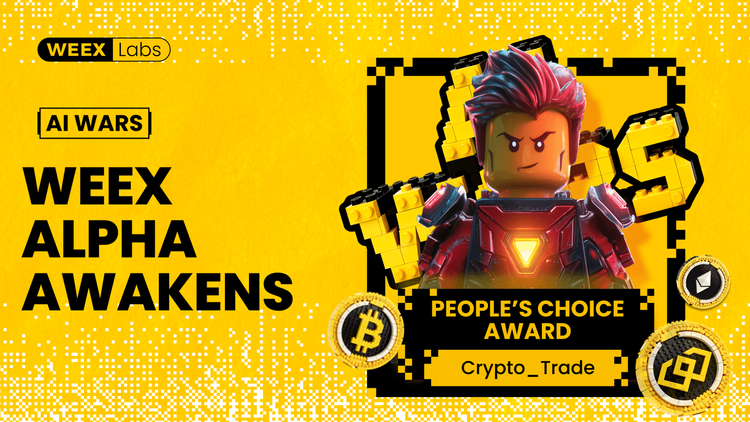
How a Structured AI Crypto Trading Bot Won at the WEEX Hackathon
Crypto_Trade shows how structured inputs and controlled adaptability can build a more stable and reliable AI crypto trading bot within the WEEX AI Trading Hackathon, highlighting a practical path toward scalable AI trading systems.
Particle Founder: The entrepreneurial insights I have gained the most from in the past year
Stop lean startup, stop lightning entrepreneurship, and think carefully about what your product aspirations are.
Huang Renxun's latest podcast transcript: The future of Nvidia, the development of embodied intelligence and agents, the explosion of inference demand, and the public relations crisis of artificial intelligence
The competition in the future is not just about whose model is larger or whose computing power is stronger, but also about who understands the industry better, who can embed AI more deeply into real processes, and who can organize these capabilities into a runnable and scalable system.
OKX Ventures Research Report: AI Agent Economic Infrastructure Research Report (Part 1)
The existing infrastructure is hostile to the Agent economy. Agents can think and act independently at the "capability level," but at the "economic level," they are still locked into infrastructure designed for humans.
The migration of settlement rights: B18 and the institutional starting point of on-chain banks
In the traditional system, banks decide the settlement; in the on-chain system, code begins to take over this responsibility.
From Tencent and Circle: Looking at the Simple and Difficult Questions of Investment
The AI narrative continues to ferment, but the recent performance of related stocks varies, with some in the midst of summer and others as if in winter.
The second half of stablecoins no longer belongs to the crypto circle
What Coinbase doesn't want, Mastercard is eager to buy.


 App
App